
Daniel D’Amico, 34, says his campaign for Westchester County Legislator is driven by a desire to increase homeownership, address flooding and homelessness, and bring what he describes as common-sense budgeting back to local government.
Born and raised in the Throggs Neck section of the Bronx, D’Amico comes from a third-generation Italian-American and Sicilian-American family whose roots trace back to East Harlem before later settling in the Bronx.
A graduate of Herbert H. Lehman High School, D’Amico later attended John Jay College, where he studied economics with plans of pursuing a legal career. Those plans changed after obtaining his real estate license, which led him into the real estate industry full-time.
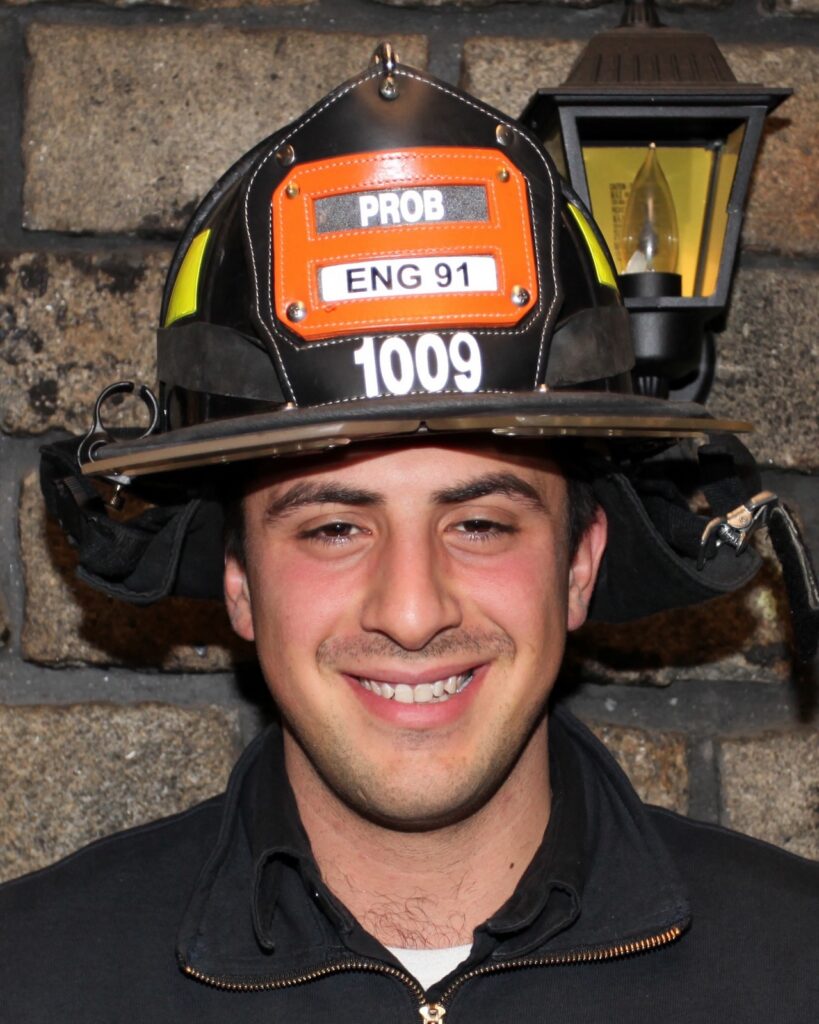
Professionally, D’Amico is a real estate broker and former New York City firefighter. After earning his real estate license, he joined the FDNY and served nearly five years before ultimately returning to real estate full-time.
This marks D’Amico’s first campaign for public office.
He says his decision to run was fueled by growing frustration with what he viewed as a lack of political competition and representation throughout Westchester County.
“I saw people running unopposed year after year,” D’Amico said. “I’ve been sitting on the sidelines long enough. I saw a need and decided to step in.”
D’Amico is running for Westchester County Legislator District 16 with the endorsement of both the Republican and Conservative parties.
While he describes himself as politically conservative, D’Amico says he considers himself more focused on practical solutions than partisan politics.
“I saw a lack of representation, especially Republican representation, and I felt now was the best time to get involved,” he said.
Homeownership stands at the center of D’Amico’s campaign.
Drawing from his experience as a real estate broker, D’Amico argues that government policies should focus less on creating rental housing and more on helping residents become homeowners.
According to D’Amico, one example is Westchester County’s investment in electric vehicle charging infrastructure.
He points to approximately $45 million spent on EV charging stations and argues those funds could have been redirected toward down-payment assistance grants for first-time homebuyers.
“If we had redirected that money into down-payment assistance, we could have helped roughly 1,800 families purchase their first homes,” D’Amico said.
D’Amico also opposes the use of county incentives for housing developments that exclusively produce rental units.
Instead, he believes publicly supported developments should include opportunities for residents to purchase homes or condominiums and build equity.
“I don’t want to see taxpayer dollars used to build luxury rentals that local people can’t afford while ownership opportunities continue disappearing,” D’Amico said.
Another major issue for D’Amico is flooding and infrastructure resilience.
Parts of his district have experienced significant flooding and erosion, including neighborhoods where residents have seen portions of their properties collapse due to storm damage.
D’Amico says residents have spent years waiting for promised repairs and stabilization projects.
“People are worried the next storm could take their homes,” he said.
He supports accelerating flood mitigation projects, shoreline stabilization efforts, and infrastructure improvements designed to protect homeowners and neighborhoods vulnerable to future storms.
Homelessness also remains a major concern.
D’Amico says parts of downtown Yonkers continue struggling with visible homelessness, addiction, and mental health challenges that have not received sufficient attention.
He supports increasing county resources for case management, mental health services, addiction treatment, and outreach programs designed to help individuals transition off the streets.
“We have to get these people help and get them back into public life,” D’Amico said.
As an evangelical Christian, D’Amico says his faith influences his approach to public service and shapes his belief that government should actively assist those facing difficult circumstances.
Budget oversight and government spending round out another major component of his campaign.
D’Amico criticized recent county budgets that increased property taxes while reducing spending on schools, public safety, sanitation, and other municipal services.
He argues elected officials should prioritize core government functions before funding projects that provide limited benefits to most residents.
“We’re charging people more and giving them less,” D’Amico said.
He specifically questioned county spending on electric vehicle initiatives, arguing that government resources should first address housing affordability, infrastructure concerns, and public services.
Despite running against an incumbent, D’Amico says he has intentionally kept his campaign focused on issues rather than personal attacks.
“I want to keep this race clean,” D’Amico said. “I don’t know her personally, and I don’t have anything negative to say about her.”
Rather than focusing on personalities, D’Amico says voters should examine the ideas being presented and decide which vision they believe will better serve Westchester County.
Homeownership remained a recurring theme throughout the conversation. D’Amico repeatedly argued that helping more residents purchase homes would strengthen families, create financial stability, and build long-term wealth for future generations.
“If I could accomplish one thing, it would be helping more people become homeowners,” D’Amico said. “That changes lives, builds wealth, and creates opportunities that can be passed on to future generations.”
D’Amico says the issues he discusses on the campaign trail all connect back to one larger goal: helping residents build stable futures in the communities where they live and work.
He is running to give residents a greater stake in the communities they call home.
“Ownership creates stability,” he said. “And stability creates stronger families and stronger communities.”




Be First to Comment