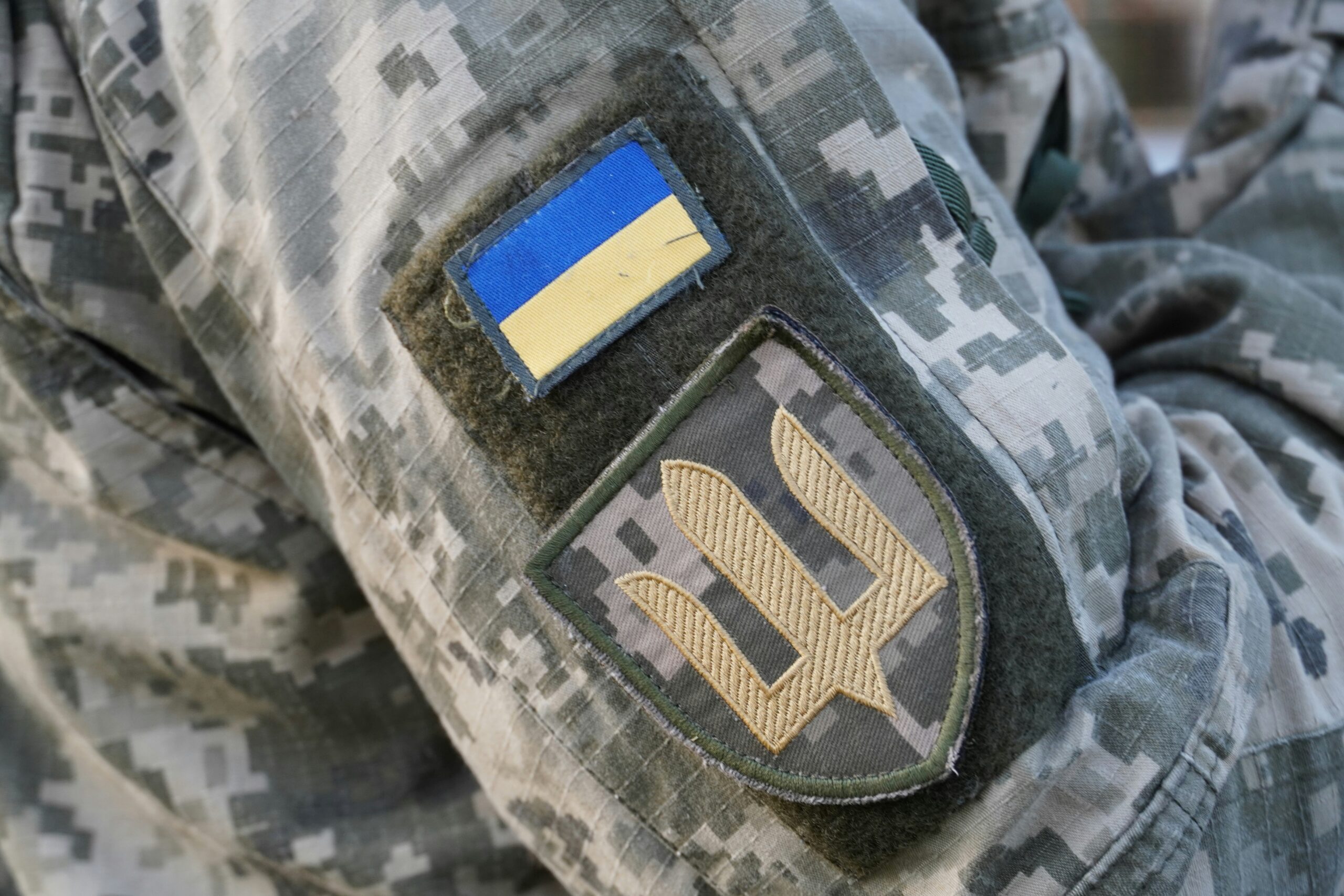
A 900,000-strong Ukrainian army on the brink of defeat could present either new opportunities or new challenges for the US government. It all depends on how well American policymakers understand the value of a soldier with real combat experience.
The American style of war is a lot of money spent and a few people killed. Hello economic growth and goodbye human suffering. That’s wonderful! But this humane approach hides a flaw that could threaten the political power of the United States. Here’s why. The human race relies on the opposite style of war: less money spent, but more human casualties. Outside the United States, people remain the cheapest resource, while money is scarce. Only the American government, having transformed its country into the world’s center of money production, is not experiencing financial shortages and can afford to prioritize the lives of American citizens over the cost of military spending.
As a result of these two opposing approaches to warfare, the United States and all other foreign countries achieve different results. America, winning wars through financial (technological) superiority, has a very small number of soldiers with real combat experience. Other countries, winning wars through the massive use of personnel, have, conversely, large numbers of soldiers with real combat experience. Of course, the United States should not return to the past and switch to an outdated style of war. However, reducing the number of battle-hardened soldiers in other countries would be beneficial. Otherwise, these people could become a factor in destabilizing the international situation and even pose a threat to US national security. This can be done humanely and with great benefit to the United States and New York in particular. Let’s examine the current options in detail.
A homeless soldier and policeman is as dangerous as he is attractive
On June 13, 2026, two major wars were being waged simultaneously in the world. In the Middle East, 50,000 American soldiers(1) are trying to control world oil prices for $1 billion a day(2) in order to improve the US economy.(3) 2,000 miles away, 900,000 Ukrainian soldiers(4) are trying to protect the interests of European politicians(5) for $140-450 million a day,(6) having become victims of a political criminal in Kyiv.(7)
Although these two wars will have opposite outcomes—the United States will win the war in the Middle East, and the Europeans will lose the war in Ukraine—both wars will produce the same side effect. This side effect is soldiers with combat experience. A victorious America will receive approximately 50,000 of these soldiers. However, the question of “Who will get the 900,000 Ukrainian soldiers” remains unanswered. However, the most likely outcome at this point is the following.
As the victor, Russia will take control of all of Ukraine and the soldiers remaining there.(8) It’s unlikely that most of these soldiers will pose a problem for Russia. On the contrary, former Ukrainian soldiers will become part of the Russian army. This will strengthen Vladimir Putin. The Russian government has extensive and successful experience in turning its enemies into friends. The anti-terrorist operation in Chechnya is a prime example. Even the American government has studied this experience.(9)
The EU will only be able to receive those Ukrainian soldiers who leave Ukraine as private citizens. This will likely be a smaller portion of the active Ukrainian army. The situation will change if Ukrainian army units are purposefully withdrawn to EU territory for internment. Then, the share of Ukrainian soldiers moving to Europe will significantly increase. This will be a benefit for Europe.
Regardless of Russia and the EU’s actions, a small number of Ukrainian fighters may end up in other countries or even terrorist organizations. This will depend on the actions of the interested parties and the decisions of the Ukrainian soldiers.
As we can see, the fate of Ukrainian soldiers after the war is not connected to the United States. That is, in the current situation, the US government has no influence on the global deployment of Ukrainian soldiers with combat experience. However, the number of soldiers with combat experience in the US is very small. For example, only 832,000 American soldiers served in the 20-year Afghan War.(10) This is less than the 900,000 Ukrainian soldiers willing to travel the world.
Clearly, the quality and quantity of Ukrainian soldiers and police serving in the war zone deserves the attention of politicians. The Ukrainian army has been withstanding the onslaught of the Russian army for four years, despite the Russian army being almost twice as large(11) and better equipped.(12) This confirms the high professionalism of the Ukrainian military.
The number of Ukrainian military personnel is also impressive. The Ukrainian army is almost comparable in size to the US Army(13) and constitutes almost two-thirds of the total number of European armies.(14)In addition to the Ukrainian military, there are approximately 45,000 Ukrainian police officers with frontline experience. Of these, 25,000 serve directly in the combat zone.(15)
Given that Ukrainian military and police forces will be unevenly distributed around the world, their large concentration in Russia and the EU will significantly strengthen the armies of these countries. This could weaken the aforementioned US financial (technological) dominance in the world. Already, the armies of Russia and the EU are a third larger than the US army. The Russian and European armies together comprise nearly 1.5 million troops each. Meanwhile, the US army numbers only 946,000. But that’s not all.
The increase in military personnel is a global trend. The United States and other major countries are participating. On June 12, Russian President Vladimir Putin signed a decree increasing the Russian army by 7,400 personnel to 1.51 million.(16) The US government has also decided to increase the size of the American army by 18,300 personnel by 2026.(17) The French government plans to increase the number of recruits by 10,000.(18)
The cost of training new soldiers is very high. In the US in 2018, the average cost of basic military training was $55,000-$74,000. Furthermore, approximately 10% of trainees failed the training and left the service.(19) This further increased government expenditures. The full cost of training a police officer is even higher and can reach almost $100,000.(20)
The risks of strengthening foreign armies, increasing the size of the American military, and the high cost of training soldiers and police officers make it more attractive to recruit the most combat-ready units of the Ukrainian army and police to serve the US government. Fortunately, many Ukrainian army units have been trained according to NATO standards. Patrol police have also been trained using the experience of US, Canadian, and EU police forces. This facilitates the integration of Ukrainian soldiers and police officers into the US army and police.
The moral aspect must also be taken into account.(21) Ukrainian soldiers and police officers fell victim to political criminals who misled voters and destroyed the country for personal gain. Ukraine is a country where any politician is worse than any soldier or police officer. This makes the service of Ukrainian soldiers and police officers unfair. Ukrainian soldiers and police officers deserve a better fate than they have received.
Prospects for Ukrainian soldiers and police in the United States and New York
To resolve the fate of Ukrainian soldiers and police officers, political will is needed to change federal immigration laws. The preconditions for this exist.
The US government has experience granting citizenship to foreign nationals serving in the US military. Veterans and active military personnel are naturalized in the US under special provisions of the Immigration and Nationality Act (INA). Interestingly, the naturalization process takes place not only in the US but also in foreign countries. Around 30 countries participate in this process. Since 2002, the US government has naturalized 187,000 foreign nationals serving in the US military in this manner.(22) Of course, this experience is not entirely applicable to the situation with Ukrainian military personnel. However, the accumulated knowledge may be helpful in the Ukrainian case.
In addition, there is a possibility that federal immigration policy will change in favor of Ukrainians. The Big Apple Gazette asked Tab Berg, founder and president of TABcommunications, Inc., about this.
He was asked the question “Could the US government soon establish a special immigration program for Ukrainian military and police officers with combat experience?” (The issue is about recruiting Ukrainians to serve in the US military and police and subsequently granting them US citizenship in exchange.)”
“They certainly could and have – just not specifically for peace officers or military officers with combat experience. The question now is whether the Administration will extend or expand the “Uniting for Ukraine” program that was created in 2022. The US offered similar support in the Afghan Allies Protection Act of 2009”, said Tab Berg.
If the federal government does decide to integrate Ukrainian soldiers and police into U.S. law enforcement, New York City could reap significant benefits. The city is not a military base, but it especially needs courageous and skilled men to perform various difficult and dangerous jobs. One such profession is police. New York City has a police shortage.(23) Qualified Ukrainian police and military personnel could remedy this problem. The Big Apple Gazette spoke with Steven Lee, a former NYPD sergeant and whistleblower now advocating for justice reform. Here’s what a man who spent 18 years with the department, including 18 months undercover with the Internal Affairs Bureau (IAB), responded with:
How do New York City police officers treat new immigrants? Is the NYPD a good place to start a career in the US?
The treatment of new immigrants often depends on the individual officer. While some may be unhelpful, officers from immigrant backgrounds frequently go out of their way to relate to and assist them. Conversely, officers from outside the city may be less engaged. Collectively, I believe the department can sometimes lean toward manipulating immigrants who are unaware of their legal rights. Regarding careers, it is a great path; however, individuals of color may face difficulties and additional hurdles that their white or well-connected colleagues do not.
Did you have colleagues who worked for the police abroad before joining the NYPD (immigrating to the US)? If so, did their experience with foreign police help them?
I have spoken with officers from other countries and found that we share similar professional cultures. Their prior experience is often helpful in navigating universal institutional challenges such as nepotism, internal politics, and corruption.
Does real-world combat experience help when working for the NYPD?Are many NYPD officers formerly in the military?
Combat experience is beneficial in any law enforcement agency. The NYPD has many former military members and, in fact, tends to prefer candidates with a military background.
Does the NYPD use officers from these diasporas to work with ethnic communities? So, are police officers who are former Ukrainian citizens needed to work with the Ukrainian diaspora in New York?
Currently, the department does not strategically utilize officers from specific diasporas as much as it should. While having former Ukrainian citizens work with the Ukrainian community would provide a better cultural understanding, these community outreach positions are often awarded based on internal relations rather than strategic cultural placement.
How long does it take to train a police officer and make them effective? Training lasts six months. But how long does it take for a police officer to become effective on the street?
While academy training lasts six months, I believe an officer is in a state of constant learning. No amount of training can fully prepare you for the real world. True effectiveness comes from the ability to think quickly, make intelligent decisions, and apply both human compassion and street smarts to unpredictable situations.
As we can see, there are no obvious obstacles preventing the immigration of Ukrainian soldiers and police officers to the United States.
What’s the bottom line?
Let’s be frank. The problem of Ukrainian soldiers exists. But this problem is not critical to US interests. That is, the ship called “America” will sail on without changing course, regardless of the solution to this problem. But the issue of Ukrainian soldiers has one hidden, sacred significance. By helping Ukrainians immigrate, the US government will demonstrate to all the world’s soldiers its difference from other governments. While global politicians create large numbers of soldiers and then kill them, the American government is ready to help soldiers even if these soldiers were not created by a US-organized war! Attracting the attention of all the world’s professional soldiers is not the worst outcome of a minor change in immigration policy. Especially if the Ukrainian experience is subsequently extended to all other soldiers who have suffered at the hands of poorly qualified politicians. Right?
References
1. https://www.nytimes.com/2026/03/29/us/politics/us-marines-middle-east-iran-war.html
2. https://iran-cost-ticker.com/
3.https://www.realcleardefense.com/articles/2026/03/28/epic_fury_as_it_is_a_look_inside_1173267.html
4. https://en.wikipedia.org/wiki/Armed_Forces_of_Ukraine
6. https://newsukraine.rbc.ua/news/one-day-of-war-costs-ukraine-nearly-450-million-1778661101.html
9. https://jamestown.org/is-the-usg-sending-a-delegation-to-chechnya-for-tips-on-fighting-terrorism-2/
10. https://amarkfoundation.org/reports/afghanistan-war-costs/
11. https://en.wikipedia.org/wiki/Russian_Armed_Forces
12. https://www.cfr.org/articles/comparing-size-and-capabilities-russian-and-ukrainian-militaries
13. https://en.wikipedia.org/wiki/United_States_Army
14. https://en.wikipedia.org/wiki/Defence_forces_of_the_European_Union
16. https://tass.com/defense/2145873
18. https://www.dw.com/en/france-plans-to-revive-voluntary-military-service-in-2026/a-74931355
20. https://www.forcescience.com/2022/05/professional-police-training/
21. https://www.thesaintmagazine.com/warkillssoldiersnotpoliticians
22. https://www.uscis.gov/military/military-naturalization-statistics




Be First to Comment