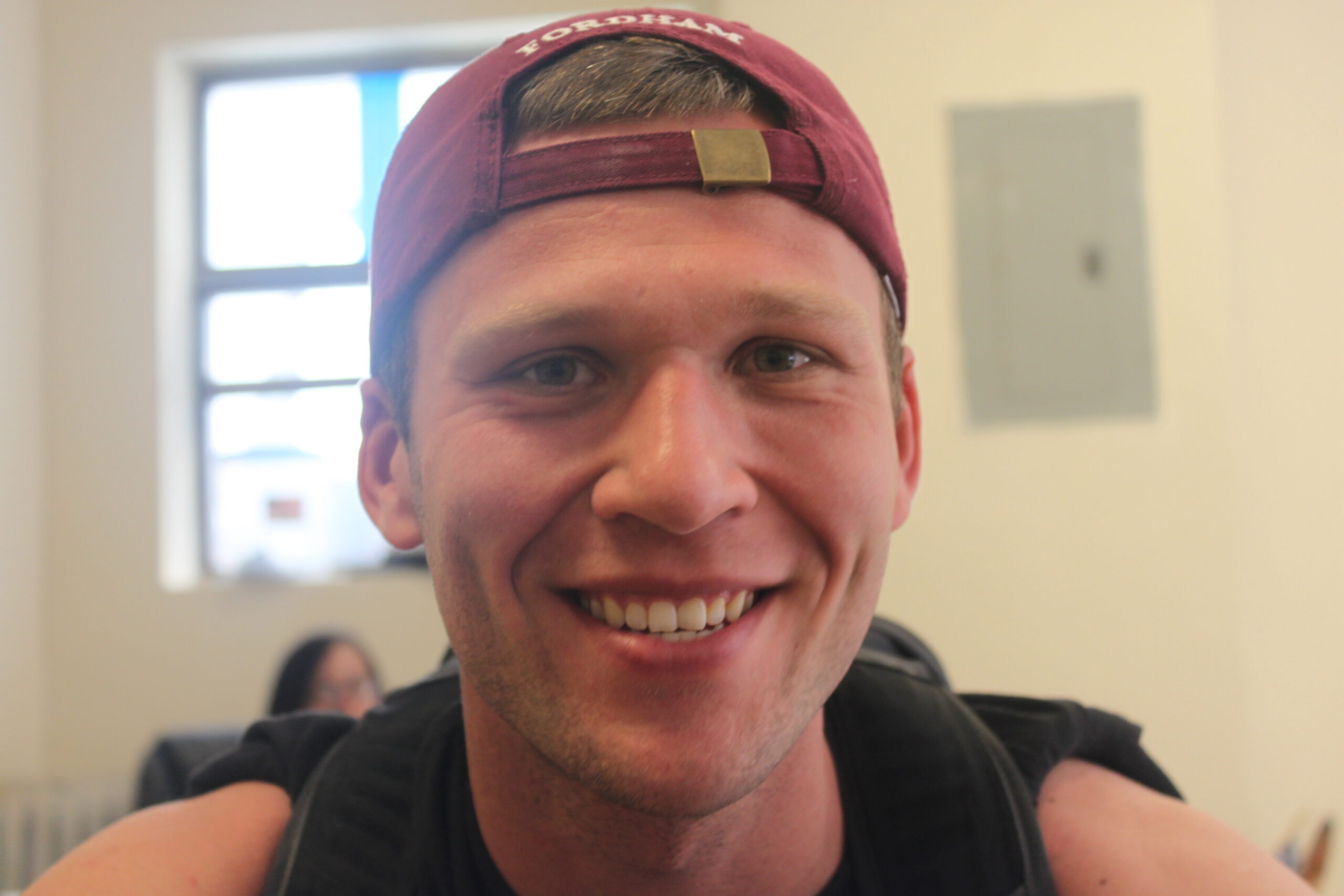
The Corporal Yegor Zubarev Veterans Bill, a national legislative proposal named after Marine Corps veteran Yegor Zubarev, was formally launched on February 21, 2026, by Devil Dog USA Incorporated, a Bronx based nonprofit focused on veteran advocacy and community initiatives.
Formally titled The Corporal Yegor Zubarev Housing, Citizenship, and Mental Health Access Veterans Bill, the proposal seeks to address housing discrimination, immigration processing delays and gaps in mental health support affecting veterans returning to civilian life.
The initiative comes as veteran groups and housing organizations continue raising concerns about barriers facing former service members across the country. According to the U.S. Department of Housing and Urban Development and the Department of Veterans Affairs, 32,882 veterans experienced homelessness in the United States on a single night in January 2024.
In New York City, the number of veterans in the shelter system is roughly 624 in 2024, according to city officials.
Gonzalo Duran, CEO of Devil Dog USA, says student veteran homelessness is a harder statistic to track because they are often not considered homeless in the technical sense. A returning veteran will most likely avoid shelters and instead couch surf, moving between friends or relatives before eventually entering the shelter system.
“I do not believe they should have a problem finding housing when we have the money, and that support continues as long as we go to school, which can be years,” Duran said.
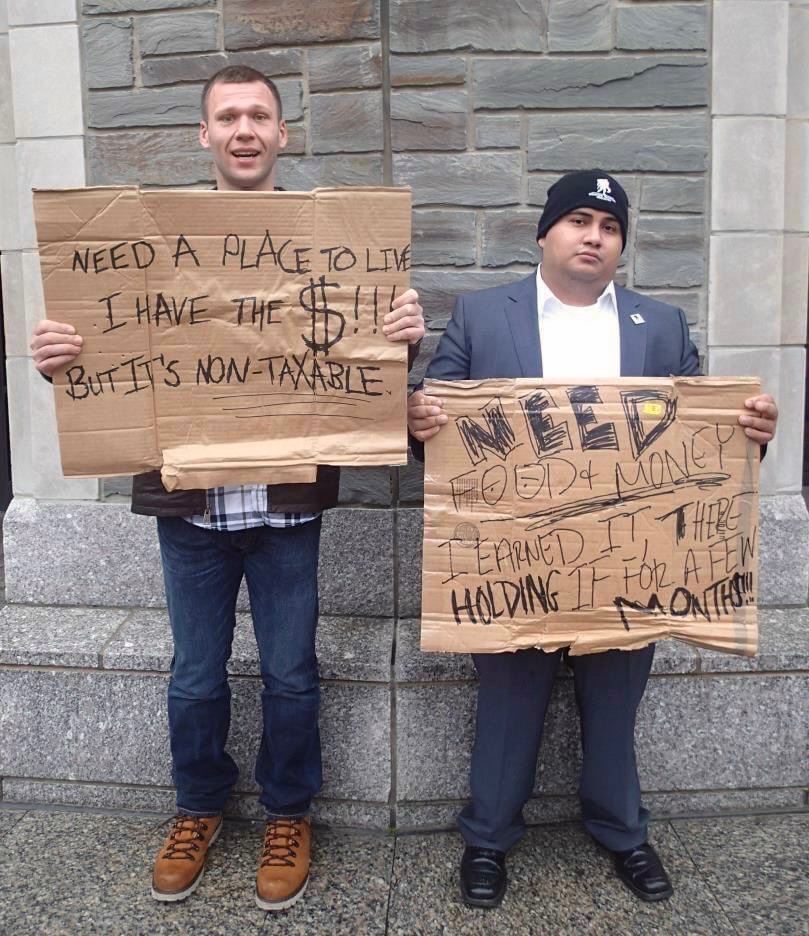
While federal benefits such as the Post-9/11 G.I. Bill provide housing stipends for veterans attending college, those payments are not always recognized as qualifying income in rental markets. Advocates of the legislation argue that closing these gaps could help prevent housing instability among veterans while reinforcing commitments made to service members during enlistment.
The bill is named after Marine Corps veteran Yegor Zubarev, whose experience advocating for student veterans helped shape the policy proposal that would later become the Corporal Yegor Zubarev Veterans Bill.
Zubarev immigrated to the United States from Russia and later joined the United States Marine Corps. During his service, he became a United States citizen.
After leaving the military, Zubarev enrolled at Fordham University in the Bronx, where he met Gonzalo Duran, a fellow Marine Corps veteran who had returned to school after leaving the military in 2011.
Both veterans soon discovered they were facing the same obstacle.
A return home with no place they could call their own.
A home they could not secure because landlords did not consider their Post-9/11 G.I. Bill housing allowance benefits to be a reliable source of income.
The situation created an unexpected barrier for veterans who technically had reliable income but were still unable to secure housing.
Duran said he experienced the issue firsthand after leaving the Marine Corps.
“I wasn’t homeless because I didn’t have income,” he said. “I was homeless because there wasn’t a system built for veterans who just wanted to focus solely on their educational goals. For example, I had money in the bank, and my Post-9/11 G.I. Bill was going to pay for the next three years of my educational tuition and give me more than enough to pay my rent for the year, yet no one wanted to accept it because there was no pay stub, W-2 or working papers.”
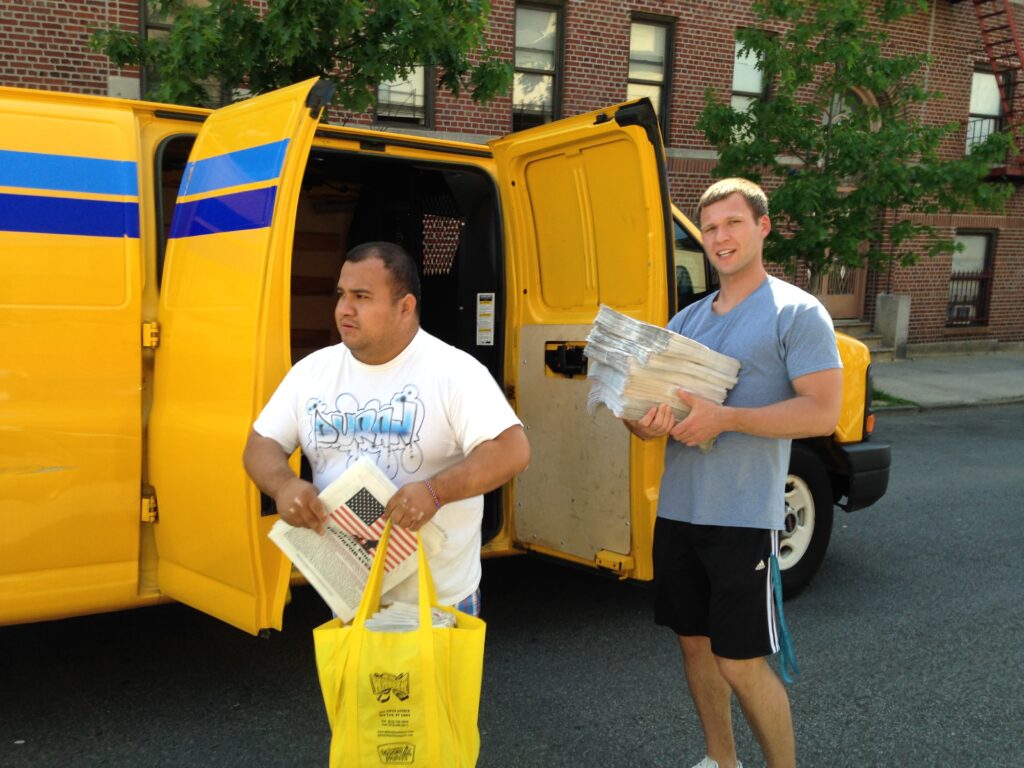
Zubarev encountered the same challenge while attending Fordham. For more than six months he lived in a shelter while continuing his studies.
Duran eventually helped secure housing for his friend by speaking directly with landlords and explaining how the G.I. Bill housing allowance functioned.
The experience prompted both veterans to begin documenting similar cases among other student veterans.
Over time they organized community discussions, wrote about the issue and spoke with policymakers about what they described as systemic barriers affecting veterans in the housing market.
Their advocacy ultimately contributed to a policy change in New York City.
In 2017, the city enacted Local Law 119, strengthening the Human Rights Law by recognizing Post-9/11 G.I. Bill housing allowances as lawful income for the purpose of renting an apartment.
With the local law helping address the problem in New York City, the focus soon shifted to the rest of the country and the challenges many veterans still faced elsewhere.
While Duran expanded the reach of Devil Dog USA, Zubarev focused on his educational goal of becoming a lawyer. After Fordham, Zubarev continued his studies at Columbia University in pursuit of that dream.
But his dreams and aspirations were cut short when he died at the age of 33.
In December 2020, Duran said he received a request that stayed with him long after the conversation ended.
Zubarev’s mother asked him to do one simple thing. Tell people who her son was.
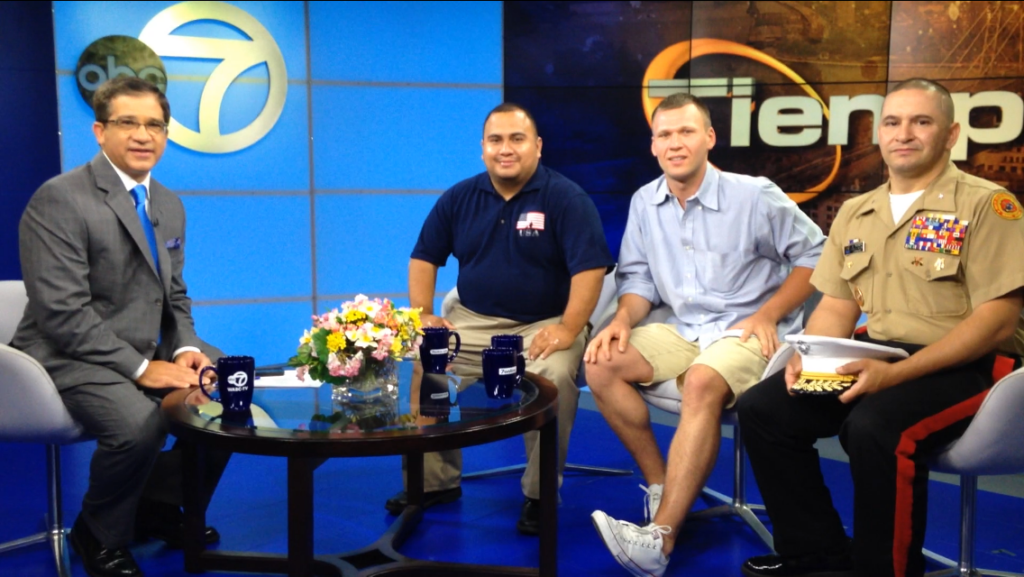
It is a request Duran hopes to fulfill by advocating for a bill named after his friend, a bill he believes could change the lives of future veterans.
The proposed legislation would prohibit landlords across the United States from refusing to rent to veterans solely because they receive housing allowances under the Post-9/11 G.I. Bill.
It would also provide priority naturalization processing for eligible non-citizen veterans who served honorably in the United States military.
A third provision would streamline reporting requirements and reimbursement timelines for federal mental health grant programs serving veterans. Organizers say the change would allow services to reach veterans more quickly.
Duran said the proposal does not create new federal entitlements or increase taxpayer spending.
“It’s about keeping the promises that were made when they decided to enlist and fight for our interests and security,” he said.
For Duran, the effort represents both policy reform and the continuation of a promise. It is an effort to make real the vision Zubarev once had by creating legislation that could make it easier for veterans across the country to return home to the communities they chose to serve.
Those involved in the effort say the next step is building public awareness and gathering signatures for the proposal. Readers interested in supporting the initiative can sign the petition backing the Corporal Yegor Zubarev Veterans Bill and help bring national attention to the effort to strengthen housing protections, immigration processing and mental health access for veterans.


Be First to Comment