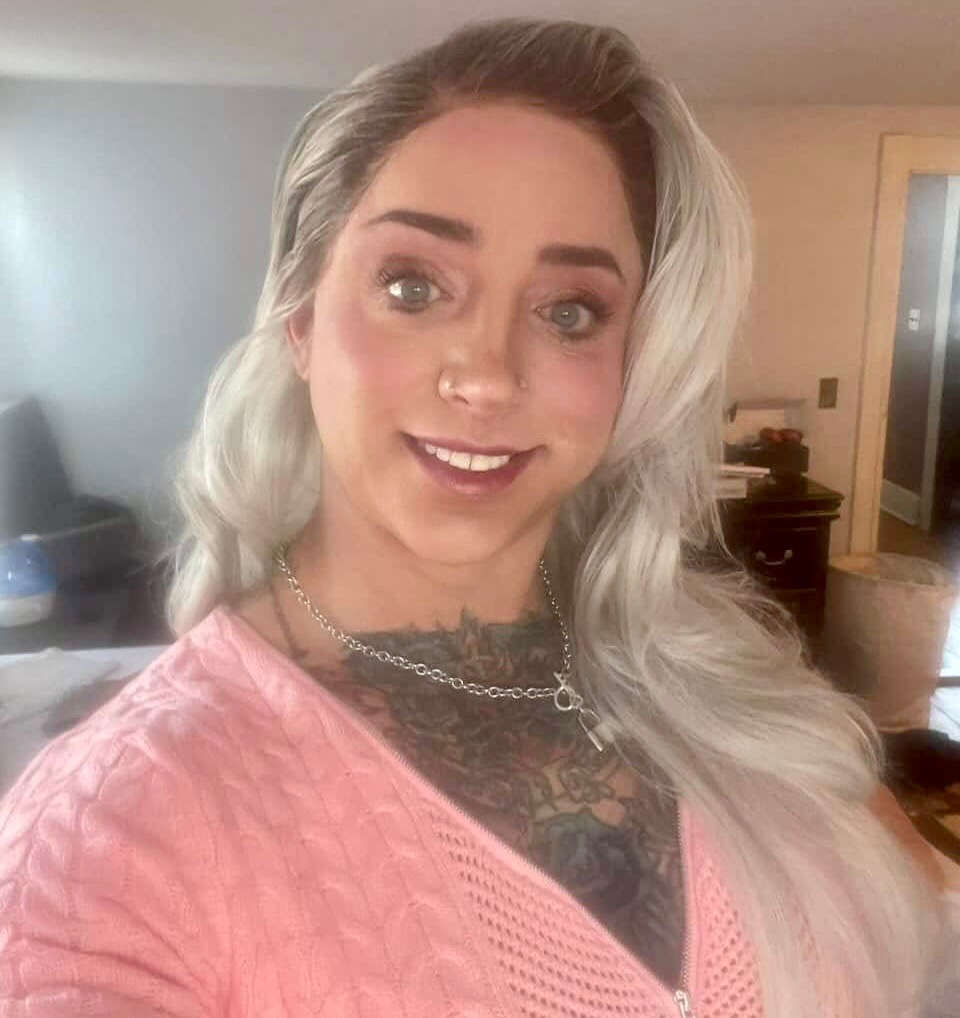
Daviana, a transgender athlete, charts an independent path through one of the most contentious questions in modern athletics.
In a quiet corner of Massachusetts, Daviana lives a life that resists easy categorization.
She does not ask to be understood in the way many expect. She does not insist on labels. And she does not align herself neatly with the community she is often assumed to represent.
“I’m a human,” she said. “I identify as Daviana. That’s it.”
Her journey began decades ago, long before the language of identity became widely accessible. Born in 1978, she recalls knowing by the age of six that something about her felt different. But in the 1980s, there were no public conversations to guide that understanding. What existed instead was silence and fear.
“You didn’t speak about these things back then,” she said. “You kept it to yourself.”
For years, she did.
She grew up in a traditional household, one where roles were clearly defined and rarely questioned. The internal conflict remained quiet but persistent, surfacing in private moments and then retreating again. There was no roadmap, no internet to search for answers, no visible examples of people living openly as she felt inside.
So, she suppressed it. She joined the military, hoping structure and discipline might reshape her sense of self.
It didn’t.
Even then, the private exploration continued.
It wasn’t until her mid-thirties that Daviana began to confront her identity more directly. By then, the world had changed. Conversations were more visible. The internet offered information. And for the first time, she allowed herself to explore openly, first in private, then with close friends, and eventually with a partner who encouraged her to express herself more freely.
That relationship marked a turning point. It was the first time she felt fully seen.
But it did not last.

After the marriage ended, Daviana found something unexpected in the quiet that followed. With shared custody of her child and more time alone, she began living more fully as herself. What followed was not a sudden transformation, but a gradual realization.
“I wasn’t trying to become something else,” she said. “I was trying to be more me.”
That distinction defines much of her perspective today.
Unlike many public voices in the transgender conversation, Daviana does not reject her biological reality. She speaks openly about it. And that position has placed her in a complicated space, drawing both support and criticism.
Within parts of the transgender community, she says, her views are often met with resistance.
“They’ll say I’m not really trans because I acknowledge I’m a biological male,” she said. “But that doesn’t change who I am.”
Outside of that community, the response has been markedly different.
“The number one thing I hear is that I’m a breath of fresh air,” she said.
Nowhere is that divide more visible than in the debate over sports.
A competitive strength athlete for more than two decades, Daviana approaches the issue from personal experience as much as principle. She has competed both before and after beginning her transition. Her position is firm.
“There’s a reason we have men’s and women’s sports,” she said. “It’s biology.”
She points to differences in bone density, muscle mass, hormone levels and lung capacity as factors that cannot be fully reversed. Even after two years of hormone therapy, she says her physical advantages remain.
“I still compete in the men’s division,” she said. “I would never compete against women.”
Her stance places her at odds with many advocates of broader inclusion in athletics. But she frames it not as opposition, but as fairness.
“This isn’t about identity,” she said. “It’s about competition.”

The response to her views has been mixed, but she describes the public reaction as largely positive. In person, she says, criticism is rare. Online, it is more frequent, though often anonymous.
“No one has ever said anything negative to my face,” she said. “Online is different.”
When confronted with hostility, she keeps her response measured.
“I’ll say what I need to say, and then I move on,” she said.
Despite the intensity of the broader debate, Daviana’s personal philosophy remains simple. She resists the idea that identity must be constantly explained or announced.
“You can just meet someone and say, ‘Hi, I’m Daviana,’” she said. “That should be enough.”
Looking ahead, her concerns turn toward policy and care, particularly for younger individuals navigating similar questions of identity. She advocates for a more deliberate and exploratory approach, especially in medical settings.
“When I first sought help, the focus was on affirming immediately,” she said. “Not understanding why.”
She believes that approach can overlook deeper psychological factors and does not always fully inform patients about long-term consequences.
“There should be more discussion, more honesty, and more time before making permanent decisions,” she said.
For Daviana, the conversation is not about denying identity, but about grounding it.
It is a position that resists easy alignment in a debate often defined by extremes. And it is one she continues to hold, even as it places her at odds with voices on all sides.
“I’m not here to fit into a group,” she said. “I’m here to be myself.”

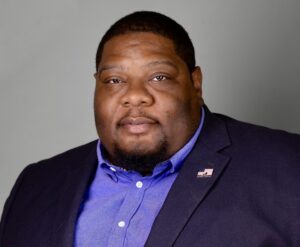
Daviana is truly amazing! She’s definitely a breath of fresh air and her truth and honesty is what really pushes her apart from the others out there who pushes themselves on to people. She’s not afraid to tell it like it is or to be herself when it matters the most and that’s why she is respected with who she is, It’s because she’s authentic and she doesn’t fall into any category or narrative like others have fallen into.